Two-Pass Shock Propagation for Stable Stacking with Gauss–Seidel
Introduction
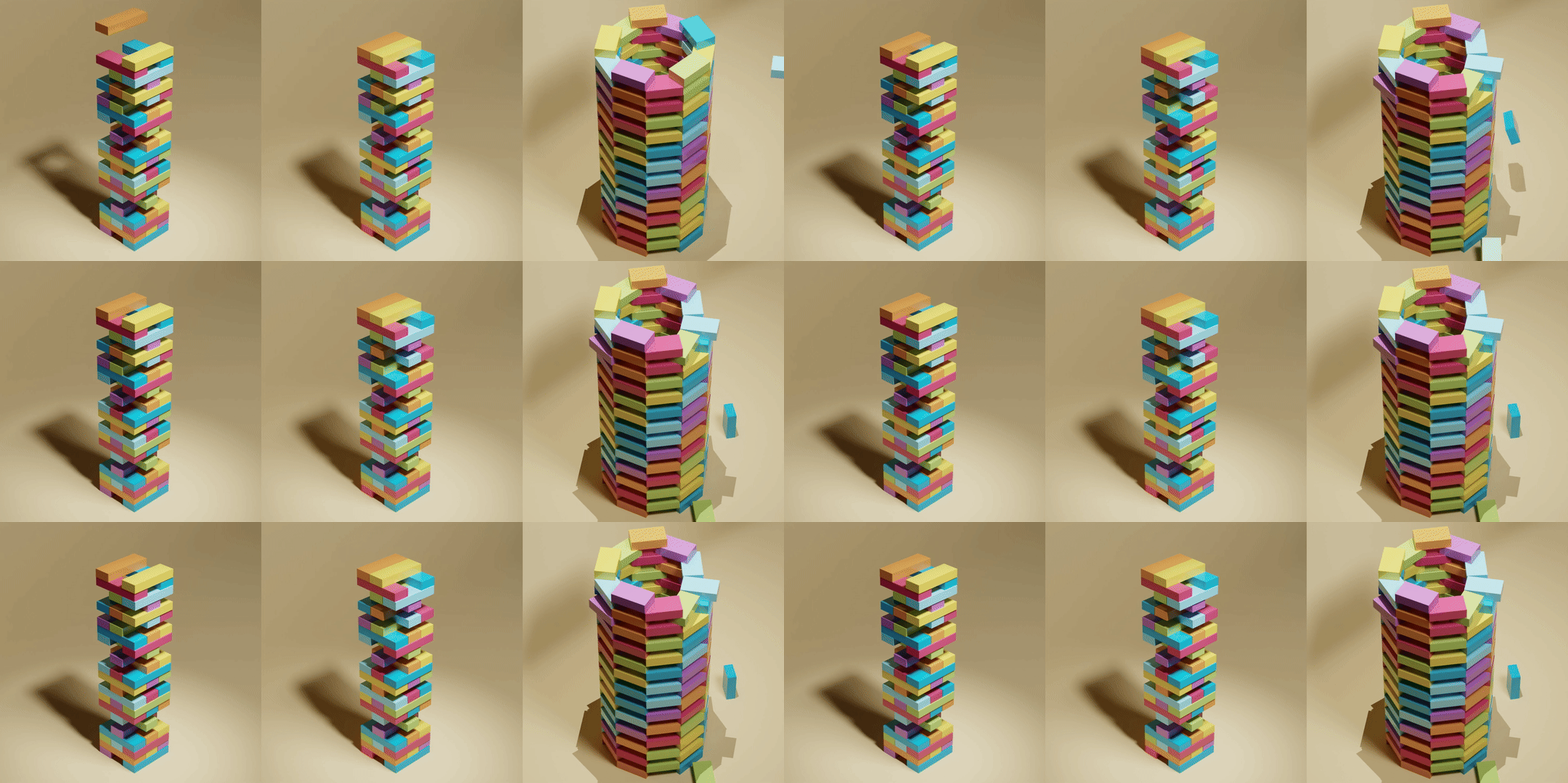
Over the years, PhysX has gained popularity as a physics library for real-time graphics and robotics. Although widely popular, PhysX and other Gauss–Seidel-based methods for rigid body simulation face a significant limitation: instability in handling frictional stacking.
To demonstrate such limitation, we present two scenarios below. The first video shows the reuslt from PhysX while simulating large objects. The second video demonstrates the artifacts from PhysX while simulating table-top sized objects.
Methodology
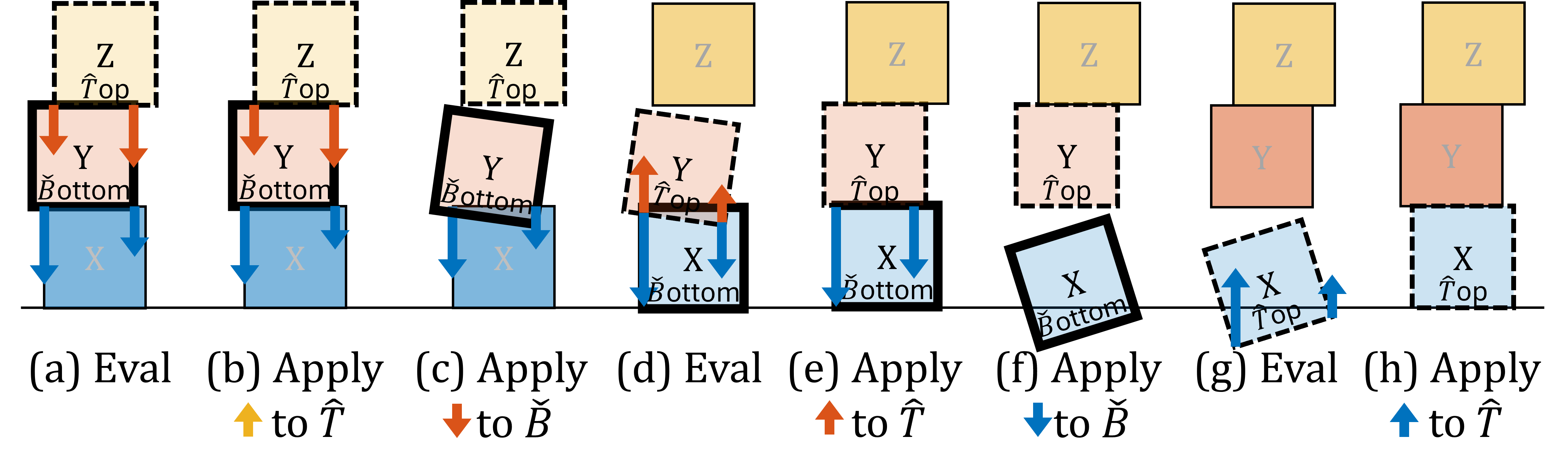
The instability inherent in Gauss–Seidel approaches arises from the slow propagation of information between rigid bodies. To address this, we leverage shock propagation and design a two-pass shock-propagation method.
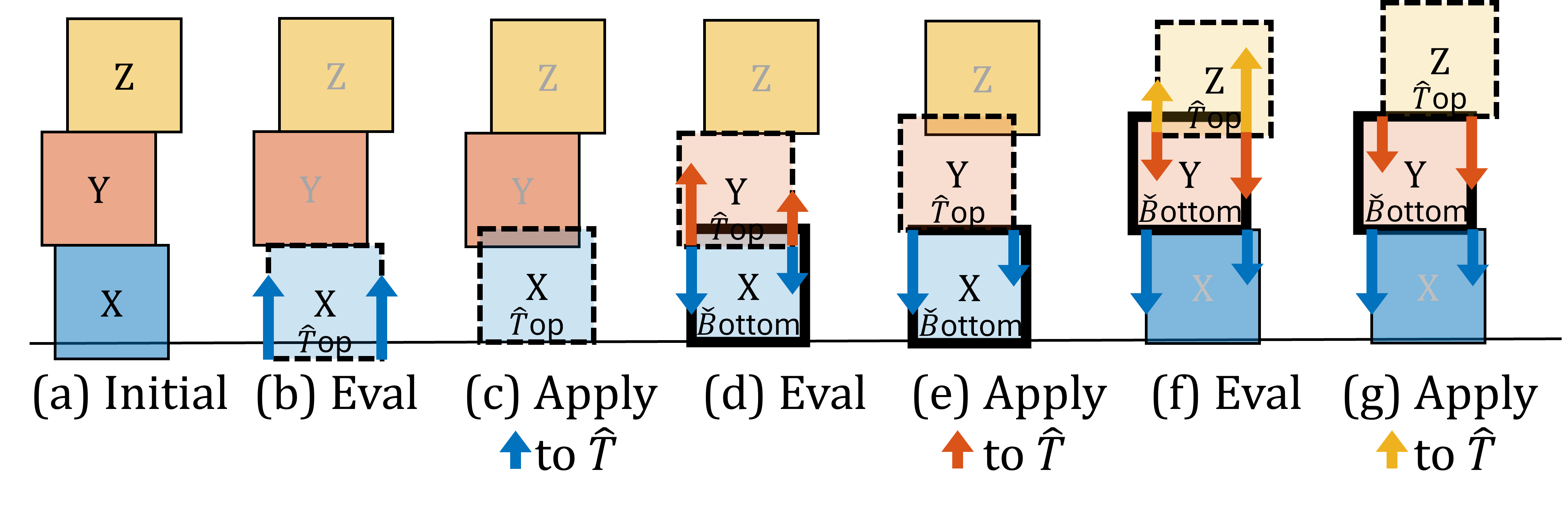
After the upward pass, we begin the downward pass from the top layer to the bottom layer. In this pass, we apply the recorded impulses from the upward pass to each layer.
Results
We tested our method on varying scenes and compared the results with the Gauss–Seidel solver with different iterations.
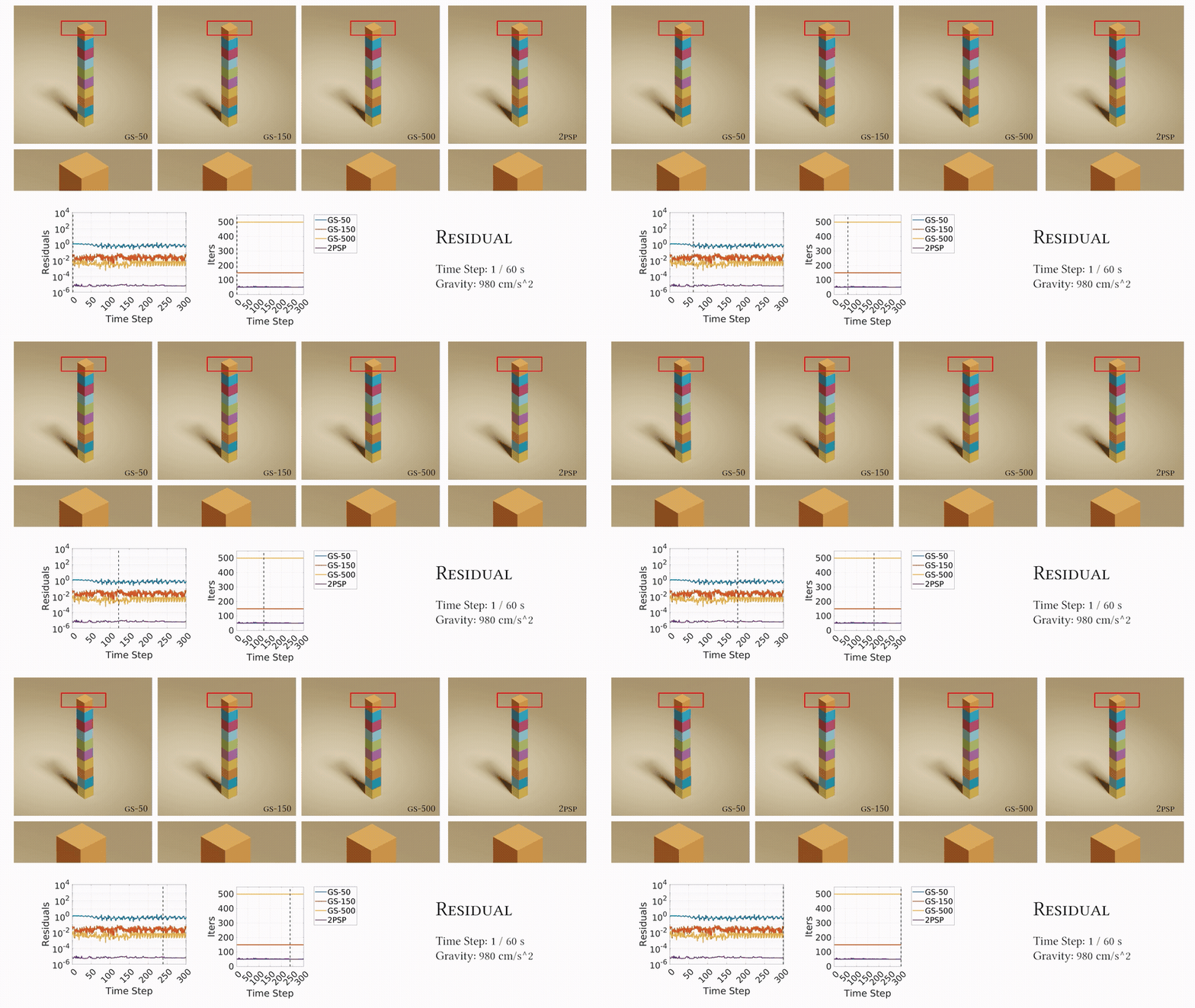
A stacking scene with 10 boxes, each measuring 4x4x4cm^3 and weighing 64g.
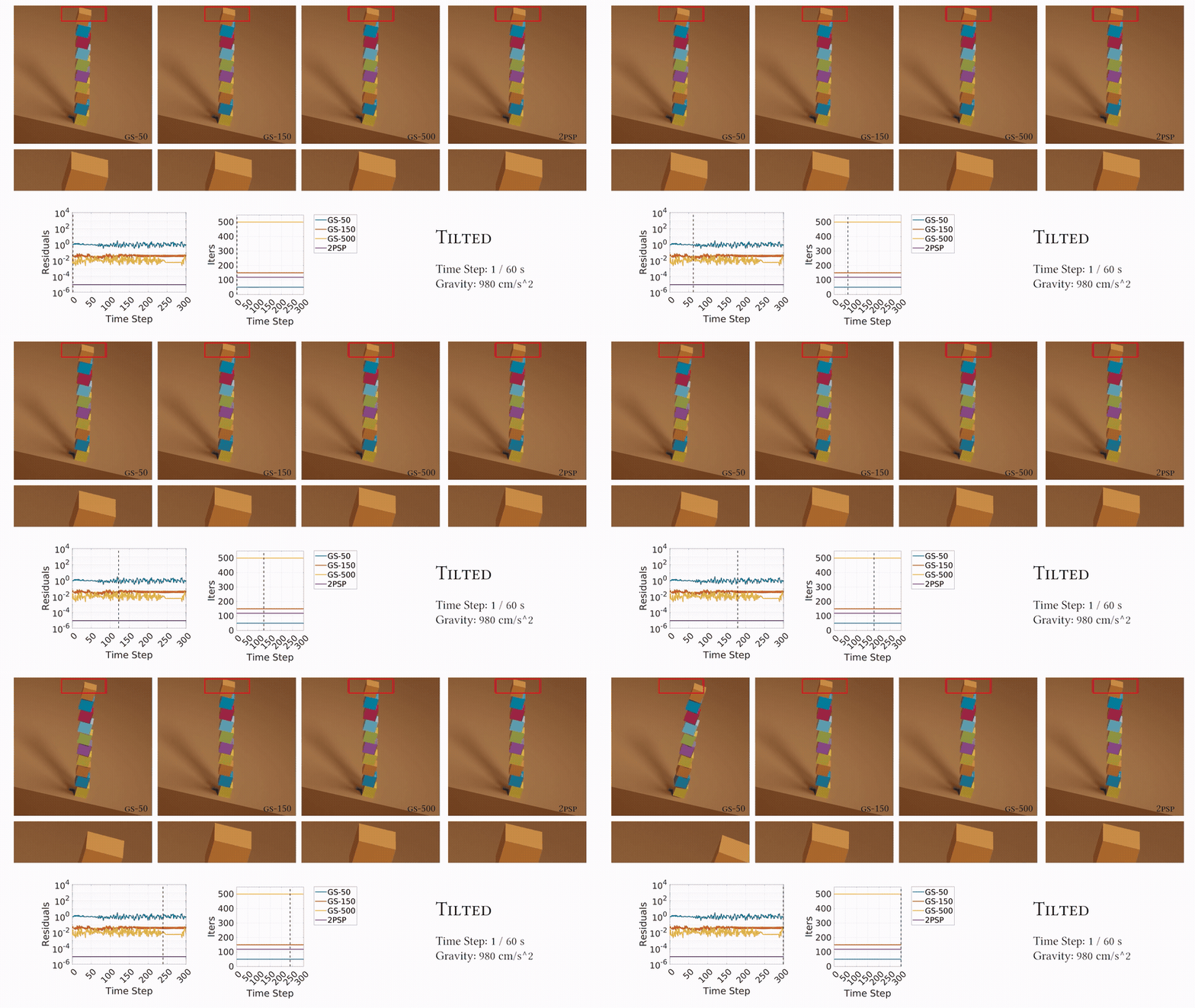
By tilting the ground plane, we verify that our approach works with non-vertical normals.
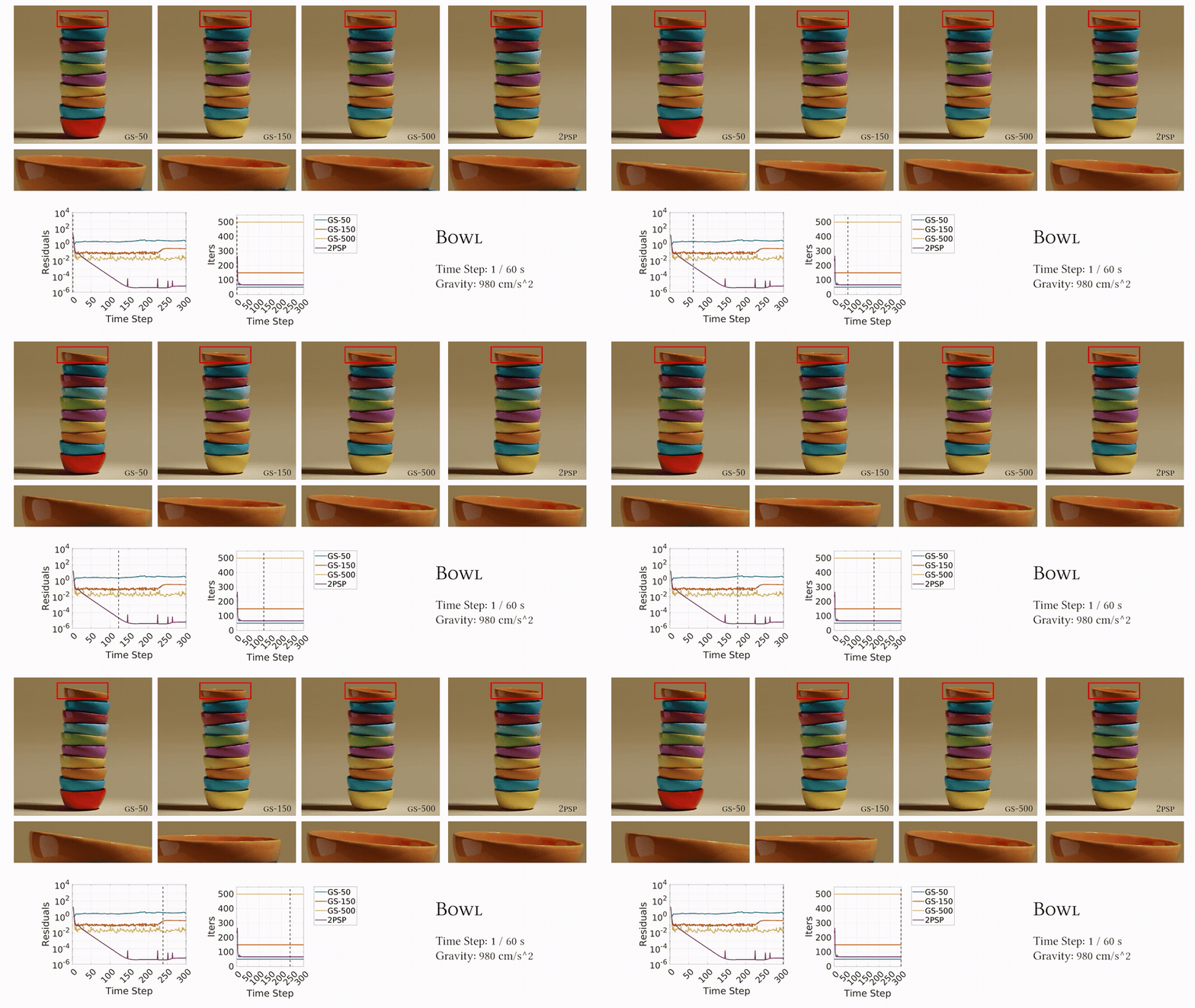
Our method works for convex objects as well.
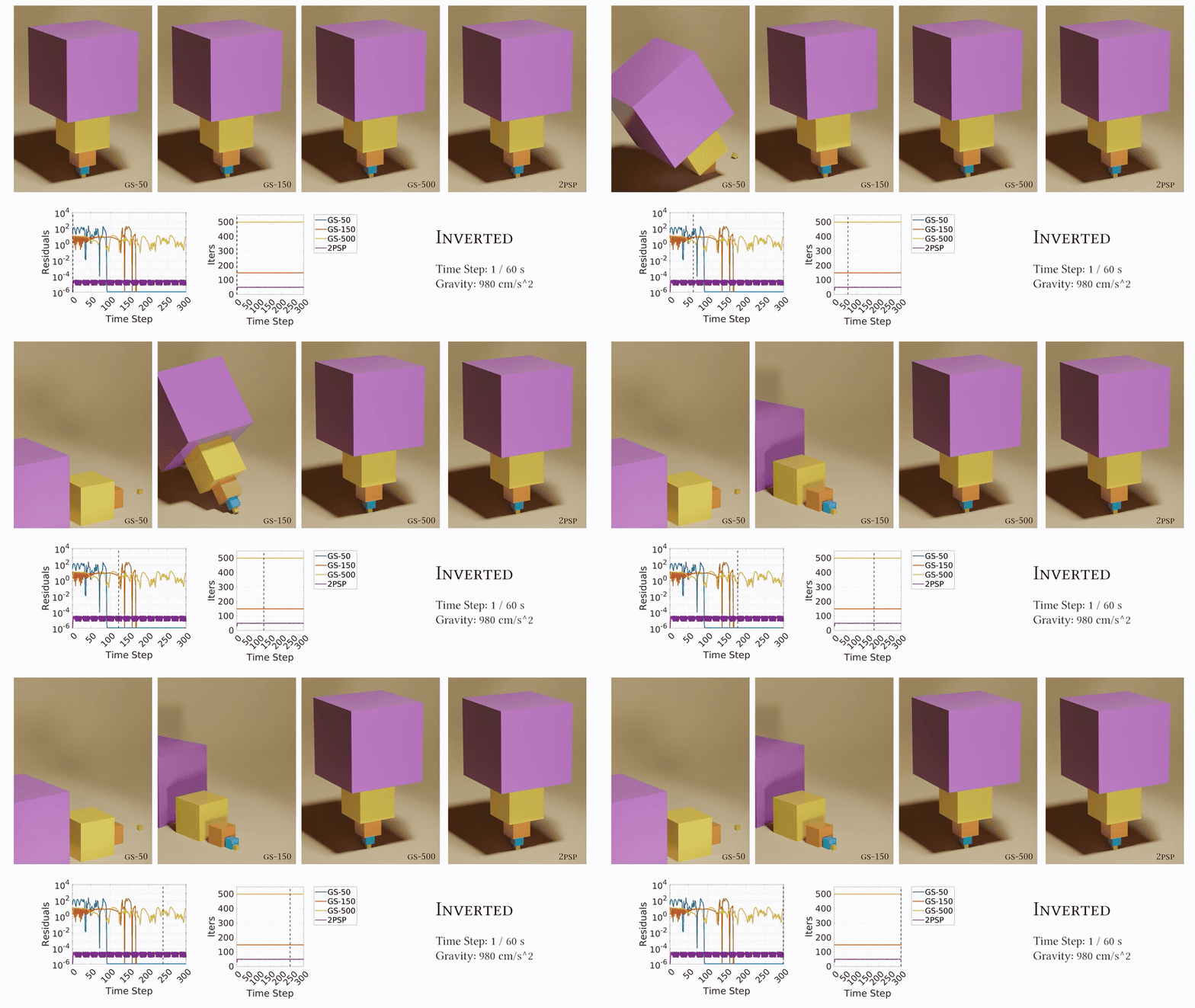
Our method can readily handle this challenging scenario involving large mass ratios.
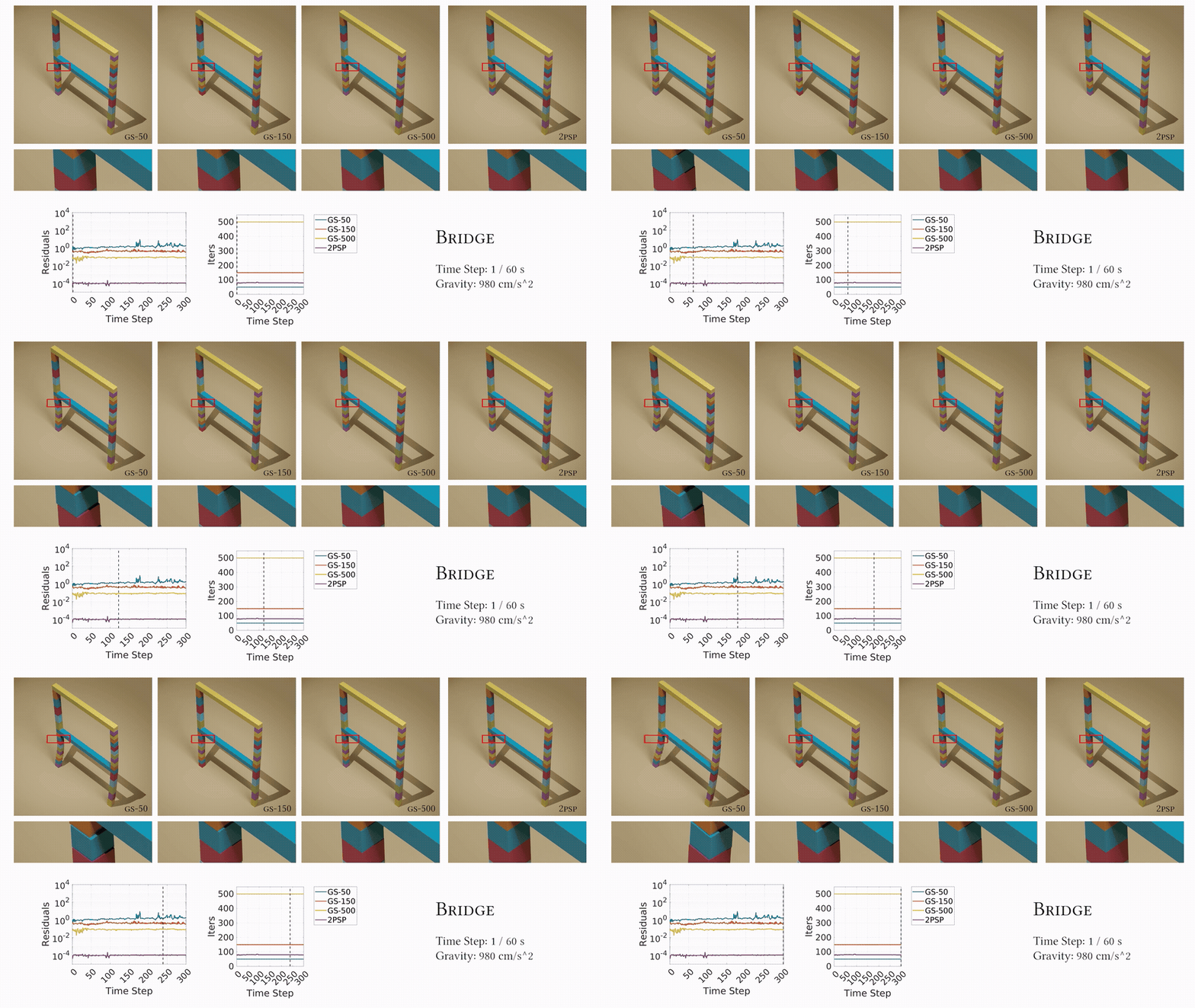
This scene features large cycles in the contact graph as well as boxes of unequal size.
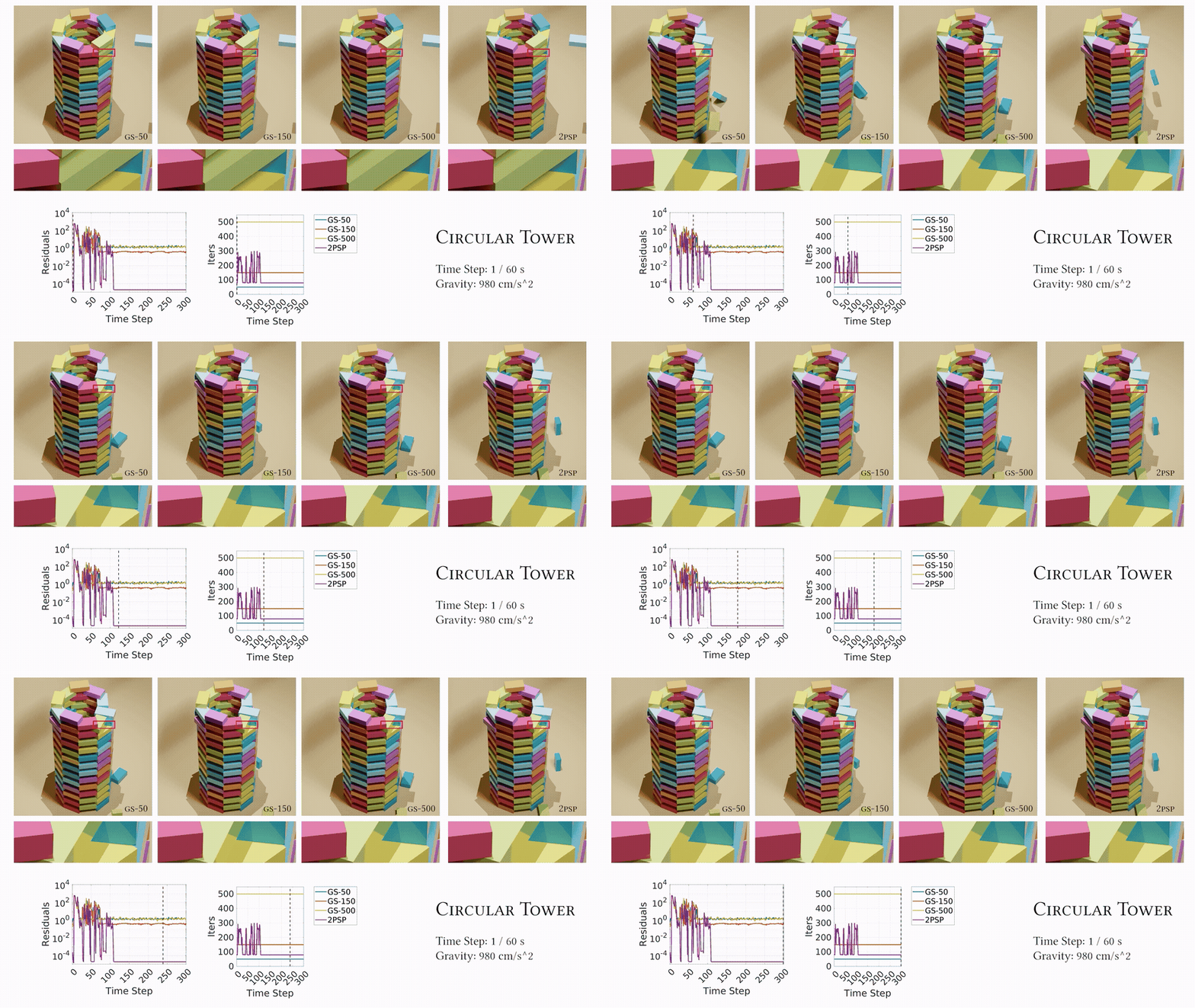
We throw a box into a circular tower formed by boxes.
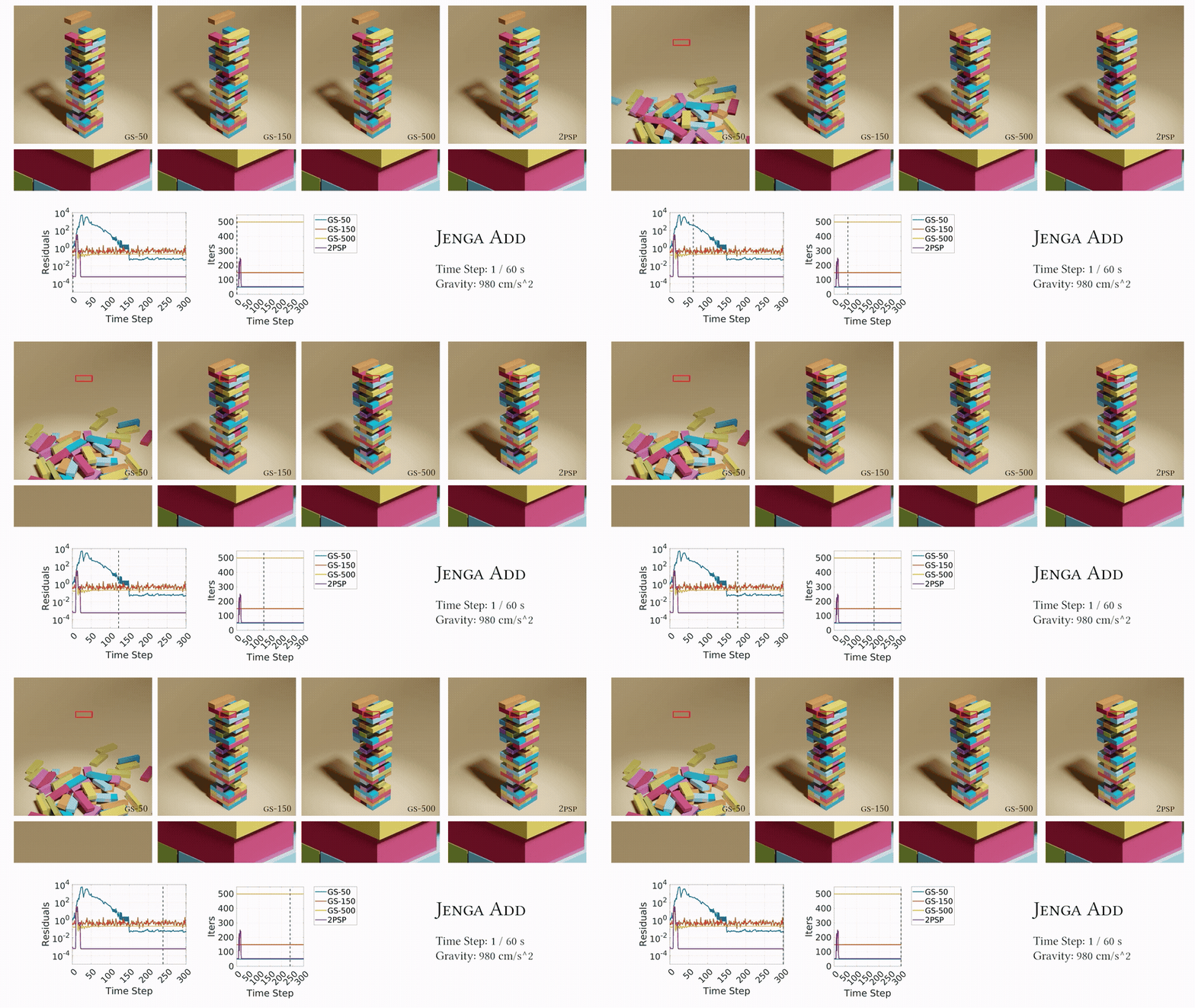
A block is first dropped onto a tower of blocks.